Category overview
The results arrive as a colorful pie chart, and suddenly everyone in the household is arguing about whether the dog is a third Husky. That argument is the fun half of pet DNA testing. Ancestry mapping has genuine entertainment and some practical value, while the other half, health-marker screening, is quieter and more consequential. A swab can flag variants worth knowing about, but it cannot examine, weigh, or diagnose the animal standing in front of you. Keeping those two halves straight is the skill this article teaches.
Two Different Questions, One Swab
Companies bundle two very different products under one envelope. Ancestry mapping compares your animal's genetic material against a reference panel of typed breeds to estimate a mix. Health-marker screening checks for specific known variants associated with disease risk. Both can be useful; neither is a diagnosis. As you compare test options in the marketplace listings, look hard at what each panel actually screens, since that varies more than any packaging suggests.
Selection tips
- Treat ancestry numbers as estimates, pleasantly imprecise by nature.
- Read marker results as risk conversations, never as diagnoses.
| Question | What the swab offers | What it cannot do |
|---|---|---|
| What breeds is my mixed-breed dog? | Estimated ancestry pie chart | Prove exact percentages or bloodlines |
| What coat and color genes does she carry? | Carrier status for coat traits | Guarantee how future puppies will look |
| Are there known disease markers to know? | Flags for tested variants only | Say your animal will develop the disease |
| Is my pet sick right now? | Nothing; this is genetics, not an exam | Replace exams, bloodwork, or your vet |
| How big will my puppy get? | A rough size estimate from variants | Beat a hands-on growth assessment |
Breed-Mix Curiosity Has Real Limits
Ancestry results are estimates wearing a confident costume. Each company compares against its own reference panel, and panels differ in size and coverage, so the same dog can produce two different pie charts that are both doing their honest best. Breeds poorly represented in a panel come out as whatever they most resemble. None of this ruins the fun, and the practical guesses, adult size, coat type, general energy, are usually close enough for planning. It simply means the percentages deserve a smile, not a frame on the wall, especially when a rare breed appears in a shelter mutt.
Selection tips
- Expect different panels to return different, still-honest estimates.
- Use breed hints for size and coat planning, not personality promises.
- Take the pie chart with a smile, not a spreadsheet.
Collecting a Sample That Actually Works
A swab fails most often at the kitchen counter, not the lab. Follow the kit's timing on food and treats before sampling, because a mouth full of dinner competes with cheek cells. Roll the swab firmly between the cheek and the gum for the full count in the instructions, then let it dry completely before sealing, since sealed moisture degrades the sample in transit. Never touch the bristles, swab only your target animal, and label immediately in a multi-pet household, because enthusiastic help from the cat is a real and documented outcome. Mail promptly.
Selection tips
- Respect the kit's pre-sampling window for food and treats.
- Dry the swab completely before sealing it for the mail.
- Label every sample immediately in a multi-pet household.
In multi-pet homes, unlabeled swabs are the classic failure. Label everything the moment it leaves the envelope, dry each swab away from curious tongues, and seal only when fully dry.
Reading Health Markers Without Overreading
A health-marker result is a sentence about risk, not a verdict about fate. Many conditions involve multiple genes plus environment, so a flagged variant means a conversation about monitoring, not a countdown. The reverse overreads too: a clear result on the tested variants is not a clean bill of health, since no panel tests for everything and most illness is not genetic. The productive response sits in the middle. Note the markers worth knowing, adjust nothing drastic, and let the report join the diet chart and vaccination records in your animal's file, where it can inform decisions slowly instead of driving them overnight.
Selection tips
- Treat flagged markers as monitoring conversations, not countdowns.
- Remember a clear panel is not a clean bill of health.
- File results alongside diet and vaccine records for slow usefulness.
Taking the Report to Your Veterinarian
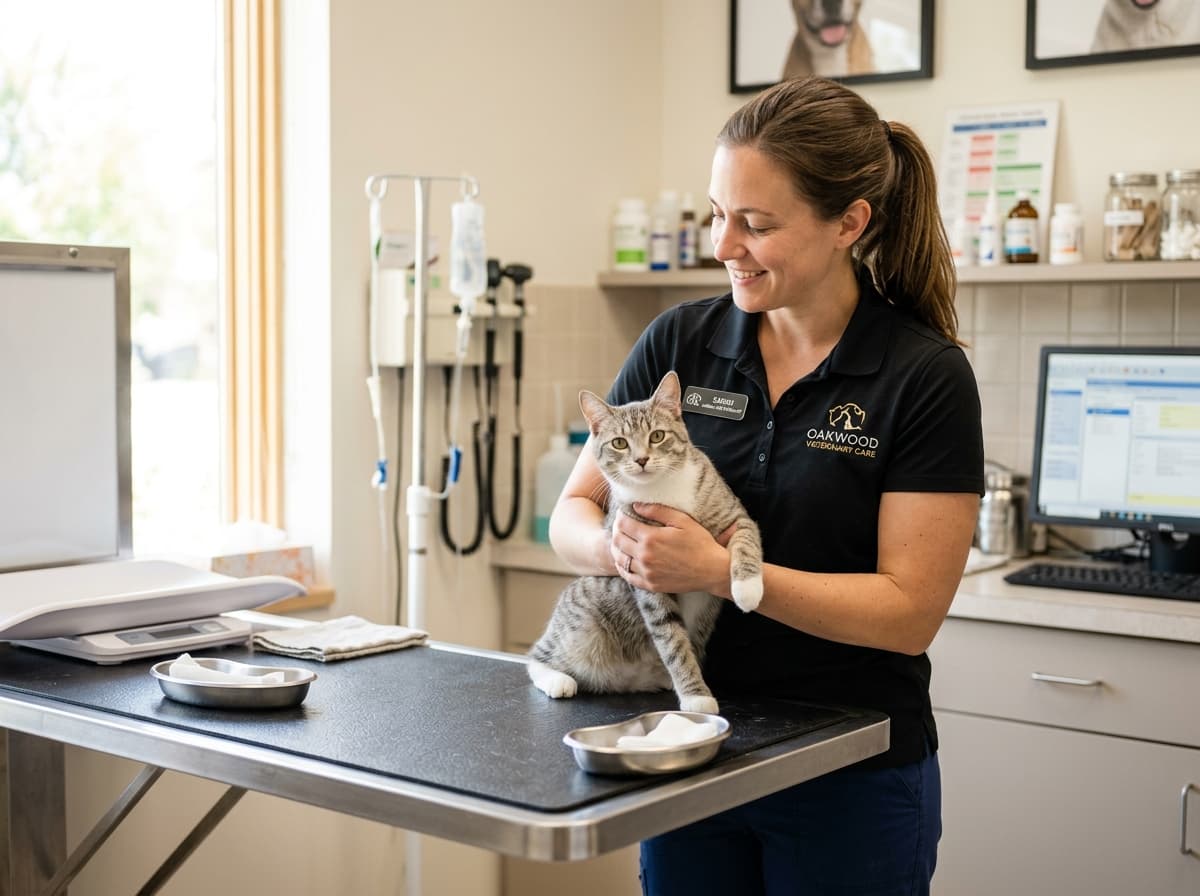
The report's best destination is your next annual exam, handed over rather than summarized. Ask plainly which flagged markers matter for your animal's age and mix, which deserve scheduled monitoring, and which can be noted and left alone. A veterinarian can turn a scary-sounding variant into a concrete plan, an occasional screening test, a weight target, or a genuine nothing-to-do, and each of those outcomes beats a private spiral through search results. Clinics are increasingly used to owners arriving with reports in hand and generally appreciate being part of the interpretation from the start.
Selection tips
- Hand over the full report at your next annual exam.
- Ask which markers warrant monitoring and which can wait.
- Ask which findings are common noise for your pet's breed mix.
Bring the actual document, not your memory of it. Your veterinarian can tell you which markers deserve real monitoring for your animal's age, size, and history, and which were written to sound more urgent than they are.
Ancestry Surprises Worth Knowing About
Sometimes the pie chart carries practical weight. A surprise of mostly-sighthound in a forty-pound frame explains the fence-jumping; a double-coated mix reframes the grooming calendar and the vacuum budget. Rescue puppies bring the biggest reveal, since an adult-size estimate shapes feeding choices for a fast-growing animal. A few panels include medication-sensitivity markers, which can genuinely matter when anesthesia is ever planned, so those belong in your vet's notes. And the rest, the third-Husky arguments and the redbone rumor from the shelter, stays what it always was: a story that makes your one-of-a-kind animal a little easier to describe.
Selection tips
- Feed growing rescue puppies for their estimate, adjusted at checkups.
- Note medication-sensitivity markers in your vet's file, not a drawer.
- Rebudget grooming when a double coat surfaces in the mix.