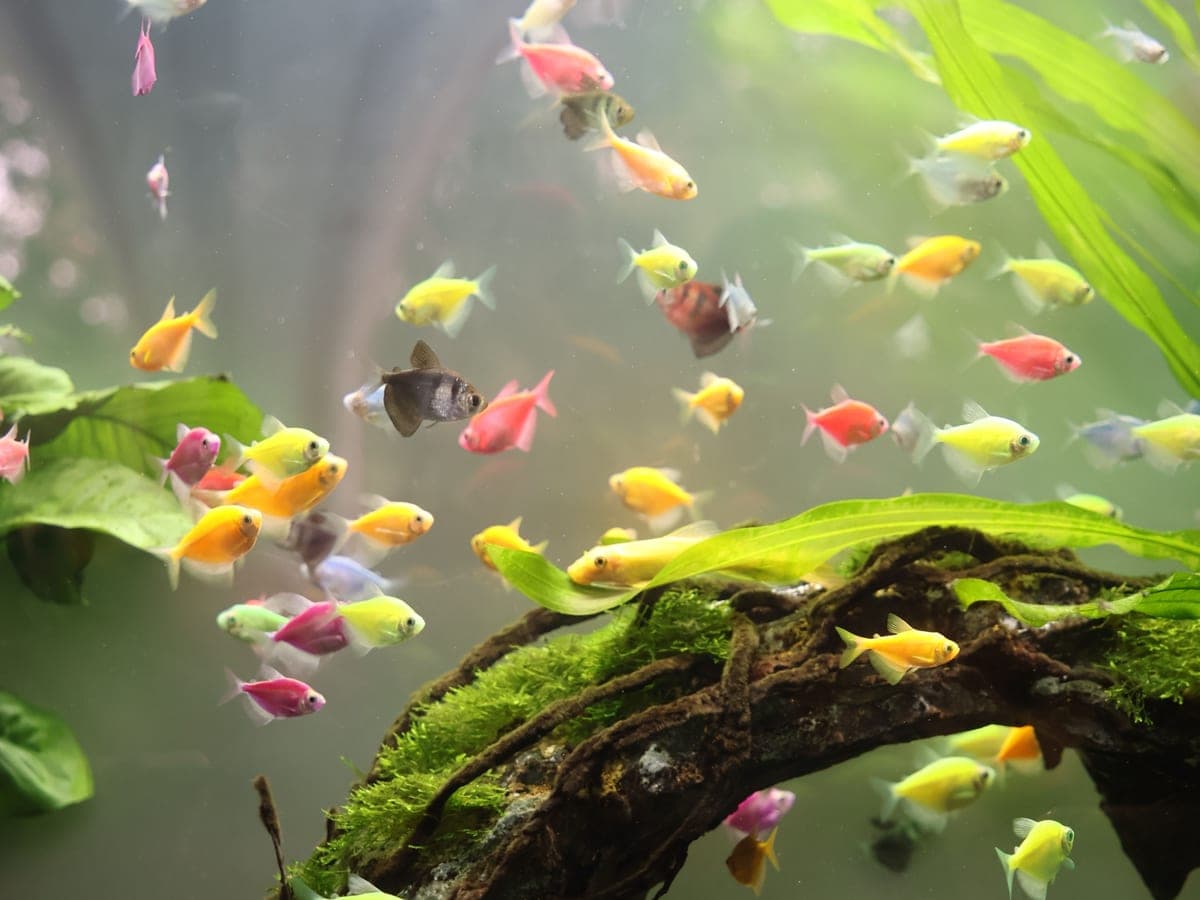
Category overview
Ask a room of fishkeepers which filter is best and you will get four confident answers that disagree, and all of them are right for their own tanks. A filter is really two decisions stacked together: how many gallons per hour it moves, and how gently it moves them. A powerful canister on a betta sorority is as wrong as a gentle sponge in an African cichlid tank. Matching hardware to water volume and temperament first saves you from buying twice.
Turnover: The Four-to-Five Rule
Turnover is the plain arithmetic of filtration: how many times the whole volume passes through the media each hour. For most freshwater community tanks, a rating near four to five turns per hour is the working baseline, so a twenty gallon tank shops around the eighty to one hundred gallon per hour mark. Heavier stocking pushes the number upward; sparse, planted, or delicate-stock tanks can sit lower. Manufacturers rate flow with empty media baskets and clean impellers, so read real-world output as somewhat below the box number, and buy with a little headroom for the day the media fills.
Selection tips
- Multiply tank volume by four or five for your target flow.
- Heavily stocked tanks earn the upper end; planted shrimp tanks sit lower.
- Treat boxed flow ratings as optimistic; plan on modest real output.
A rating slightly above your target ages well as media clogs and stocking grows. Undersized flow forces a second purchase the moment the bioload climbs.
Hang-On-Back Filters for Most Tanks
The hang-on-back is the default for a reason. It clamps to the tank rim, lifts out in one piece for servicing, and exposes its media trays to the room so you can see when the chamber needs attention. Adjustable flow valves let you tame the current for slower fish, and a prefilter sponge slipped over the intake protects fry and shrimp while adding surface area for bacteria. Their weaknesses are equally plain: evaporation hums through the spillway if the water level drops, and the media space is modest compared with a canister.
Selection tips
- Top off the tank regularly; low water makes the spillway gurgle.
- Fit an intake prefilter sponge to shield shrimp and fry.
- Dial the flow valve down before adding slow swimmers.
Canister Filters for Heavy Bioloads
Once a tank passes the roughly forty gallon mark, or the stocking gets ambitious, canisters start earning their price. Everything sits in sealed, stacked baskets: mechanical pads up top where you can reach them, biomedia below where it stays undisturbed for years. The hoses let you place the motor inside the cabinet, so the room stays quiet, and overall media capacity dwarfs any hang-on-back. The trade is service weight: a full canister holds a lot of water, so close the valves, release the latches, and carry it to a sink rather than wrestling it in place.
Selection tips
- Shut the intake and output valves before breaking any hose seal.
- Stack mechanical pads above biomedia so gunk never buries the colony.
- Prime with the vent valve rather than sucking on a hose.
Sponge and Internal Filters for Gentle Setups
Sponge filters are nothing but foam around an airlift, which sounds primitive until you see what they do: enormous biological surface, current gentle enough for bettas and shrimp, and a price that leaves room in the budget. An air pump drives them, so the only sound is a soft bubble hum. Internal power filters suit nano tanks and quarantine or hospital tanks where a filter you can sterilize between uses beats sheer capacity. Neither polishes water the way packed carbon can, but for growing colonies and keeping delicate stock calm, both are quiet workhorses.
Selection tips
- Run two sponges so you can rotate cleaning without losing bacteria.
- Squeeze sponge media in removed tank water, never under the tap.
- Choose an internal with a flow dial for quarantine setups.
Matching Flow to Fish Temperament
Fish sort themselves into two broad camps. Danios, barbs, rainbowfish, and goldfish come from moving or open water and enjoy a pushy return current to swim against. Bettas, gouramis, many slow-water tetras, and long-finned varieties tire against that same push, spending their day hiding behind decor to escape it. Watch the tank after lights out: fish listing sideways in the outflow, or pinned to one calm corner, are telling you the current is wrong. A spray bar aimed along the back glass spreads the stream; an airline or baffle tames it further.
Selection tips
- Watch resting fish after lights out; listing flags too much flow.
- Aim spray bars along the glass, not into open swimming space.
- Prefilter sponges and outlet baffles soften current cheaply.
Filter Types by Tank and Stock
Set the four families side by side and the choice stops being abstract. The table matches each filter style to the tanks and stock it serves best, plus the honest cost of choosing it. Read those rows against your own numbers: tank volume, intended stocking, and how much weekly fuss you will genuinely tolerate. Browsing marketplace listings makes side-by-side flow ratings easy, which is exactly the comparison worth finishing before checkout.
Selection tips
- Cross-check gallons-per-hour ratings against your turnover target before deciding.
- Weigh servicing effort alongside capacity; lazy maintenance undoes good filtration.
- Keep future stocking in view; today's gentle community may grow ambition.
| Filter type | Best fit | Watch for |
|---|---|---|
| Hang-on-back | Ten to forty gallon communities | Modest media space, spillway hum |
| Canister | Large tanks and heavy stocking | Heavy servicing, hose plumbing |
| Sponge | Bettas, shrimp, fry, hospital tanks | Little mechanical polish |
| Internal power | Nanos and quarantine setups | Occupies swimming room |
Air Pumps and Their Quiet Jobs
Pumps are the quieter half of this aisle and the part people forget to plan. An air pump drives sponge filters and airstones, adds surface agitation during summer heat, and backs up circulation during an outage if you own a battery version. Water pumps move flow between a sump and the display, or add current in big tanks. One small fitting matters more than any of them: the check valve in the airline stops water siphoning back during a power cut, protecting the pump and the floor. Comparing pump models, noise ratings and spare part availability tell you more than peak output.
Selection tips
- Fit a check valve in every airline to stop back-siphoning.
- Match air pump output to your tank's depth, not just price.
- Keep a battery air pump ready for outage nights.